Urban Mosquito Habitat Prediction
Geospatial detection and productivity prediction for urban mosquito larval habitats to support field surveillance.
Africa’s progress toward malaria elimination is being threatened by the recent invasion of Anopheles stephensi, an urban-adapted Asian malaria vector now spreading across multiple countries, including Ethiopia, Somalia, Kenya, Nigeria, and Ghana. This species thrives in man-made urban water containers, especially construction pits, shows high resistance to adulticide insecticides, and exhibits biting behaviors that reduce the effectiveness of traditional malaria interventions. My work is to predict An. Stephensi habatit and productivity to support efficient on-site treatment, as well as the comprehensive geospatial support for site larval survey, from satellite image processing to navigation app. This is an ongoing project, funded by the Gates Foundation.
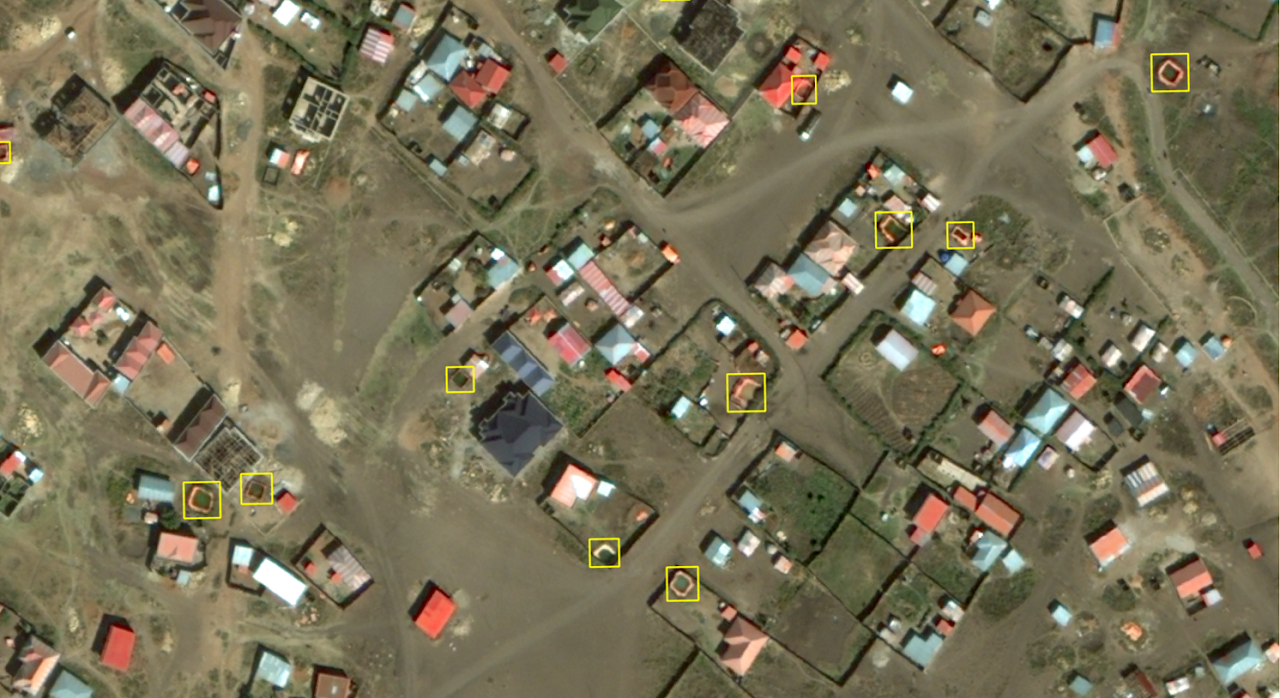
Detected construction pits, a major type of mosquito An. Stephensi breeding sites.
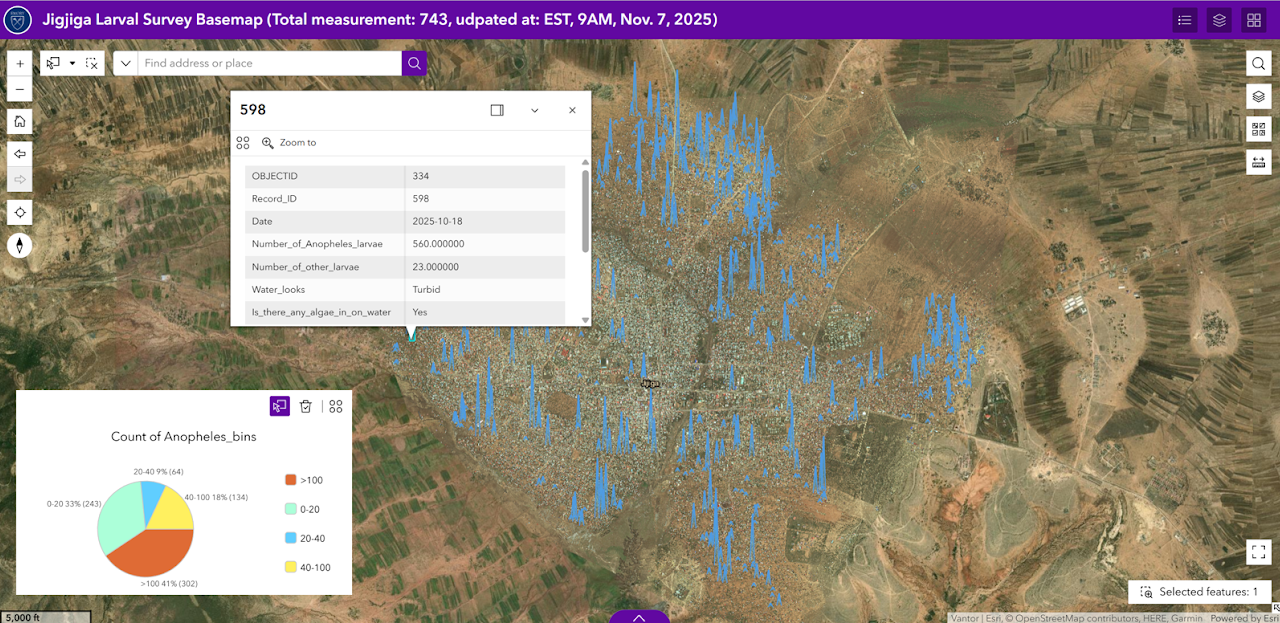
Online map for on-site larval survey visualization.